
In the book, The Lost Girls: Three Friends. Four Continents. One Unconventional Detour Around the World, by Jennifer Baggett, Holly C. Corbett, Amanda Pressner, the three “lost girls” are in Africa and learn the word, muzungu. “I learned that [muzungu] originally meant ‘one who travels around,’ referring to the European traders who came in the 1800s.” As a “muzungu” or one who travels around, I really enjoyed this travelogue with the three 20-somethings on a mission to see the world, have adventures, and as with all long journeys, to find themselves.

Their three voices share the storytelling and their personal sagas. Each brings personal experience and dreams to be fulfilled. Learning to scuba dive, teach yoga or help young African girls through creating a play, is mingled with the dramatic tuk tuk rides, muddy hikes and their evolving lives.
During my summer Sri Lankan adventures in 2010, while reading this book, I had an incredible new experience! At the Flower Inn outside Sigiria Ancient Rock Fortress I went to the toilet and A FROG jumped out of the toilet. I was surprised to see a frog and it smelled like crap which makes sense since it must have climbed through the septic system. Later that night as I checked the toilet first, there were two smaller frogs and tons of ants. Not a huge shock, as we generally stayed in hostels that rank on our scale of minus one star.

We did have a typical rice and curry dinner which was a feast of 14 dishes of curry including pumpkin, Jackfruit, carrot, potato, vegetable soup and an omelette at the family owned Flower Inn which was started in 1972.
Sri Lanka is definitely a wild adventure and was a great place to read, especially when we were not allowed out at night due to wild elephants that wander in Sigiriya. In the book, The Lost Girls, they learn to be better friends to each other and themselves as they evolve while discovering the beauty of the Taj Mahal, the forgiveness of a van company after you total their car, and the importance of true friends who support you through all of life’s struggles.
One of the quotes which really spoke to me is from the beginning of the book, “The world is round, the place which may seem like the end may also be the beginning. Ivy Baker Priest.” The more I travel, the more I learn about myself and that the end is only the beginning. Like the actual Lost Girls in the story, I have “prioritized adventure and discovery over stability and structure” and that has made all the difference on the road less traveled.

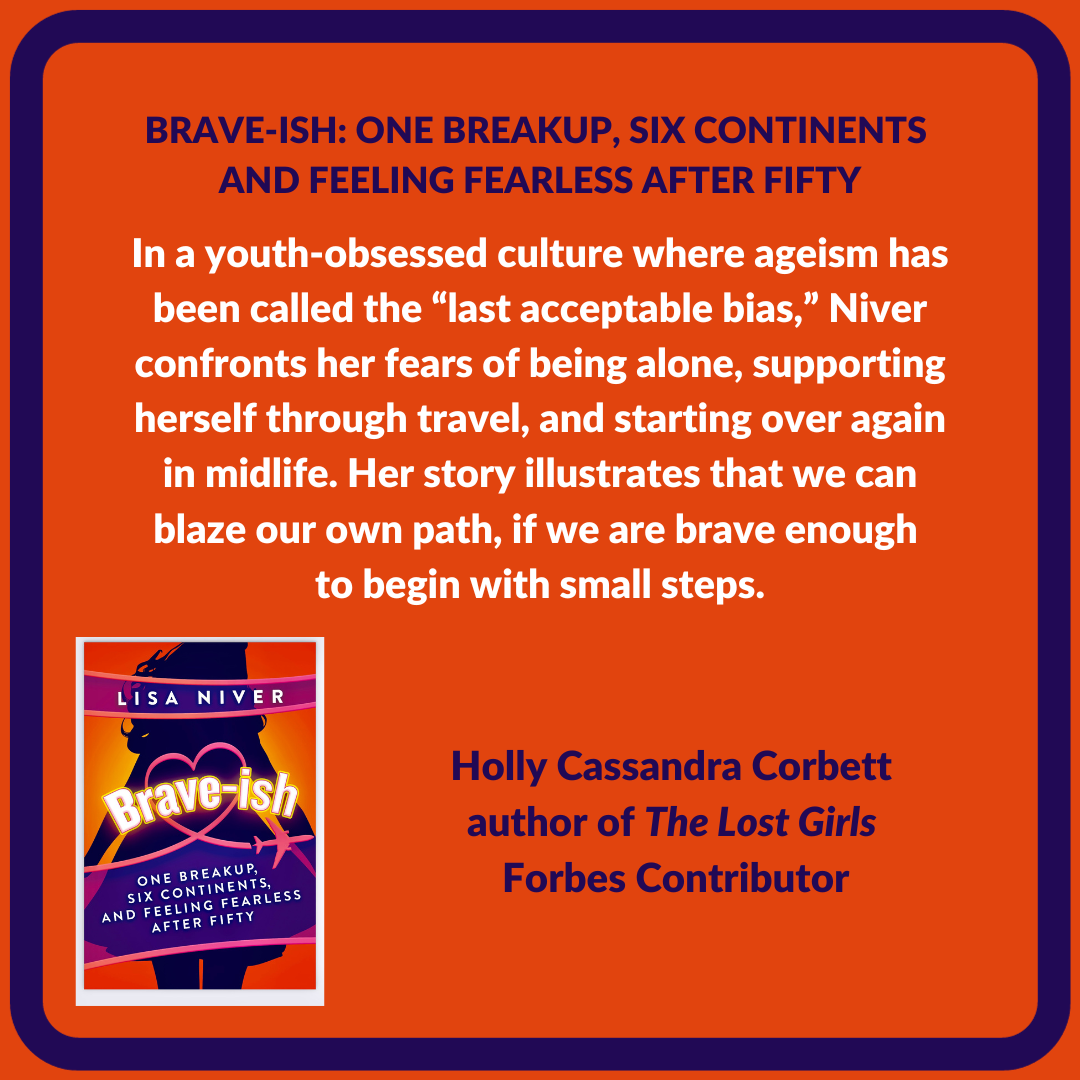
2024 UPDATE: This article was first published on Technorati in 2010. Now I have my own memoir, BRAVE-ish, and one of THE LOST GIRLS, Holly Corbett, wrote about my book for Forbes!
Holly and I have had several adventures together in NYC including one to The Strand Bookstore in NYC where we had a photo shoot with both of our books!

From LM: "Lisa,
Have a wonderful holiday on your next adventure!!!! I am looking forward to the updates as i live vicariously!
xo,"
Thank you!
Joseph Ernest posted the following in response to this article at technorati:
"Actually Mzungu is a Swahili word and Muzungu with a "U" is a Ugandan word. Both words mean "English person." The only place you hear that word is East Africa which was once a British protectorate. The original explorers to arrive in Uganda and Kenya were English. People like Speke, Grant, David Livingston and so forth. The language they spoke was English which is referred to as "Luzungu." So a person who speaks "Luzungu" is a "Muzungu" in Swahili it would be "Mzungu."
The word has now evolved and is used to refer to White people. A group of white people are "Bazungu" The "Ba" is used as a collective noun the "Mu" as a singular noun. So as long as you are of European descent they will refer to you as a Muzungu, because they assume you are English speaking. People from France are referred to as "Bafaransa" if it is one person it would be "Mufaransa." Whoever told you it meant "One Who Travels Around" musn't know their native language. One who travels around is "Mutabaazi" and the collective noun is "Batabaazi."
Read more: http://technorati.com/lifestyle/travel/article/mzungu-one-who-travels-around1/#ixzz181zipYMF
Great post, love it! haha Anyway, today I had a big luck and want to share it with everyone – I finally found a way to make cheap calls to Australia, where my cousin Becky lives! There's this very neat site, briing.com, that offers a fast and easy way to reach your friends and relatives all around the world! You simply dial 084 3278 7878 for Australia landlines, and if you're in the UK, you can call Australia and talk for as long as you like! 🙂